
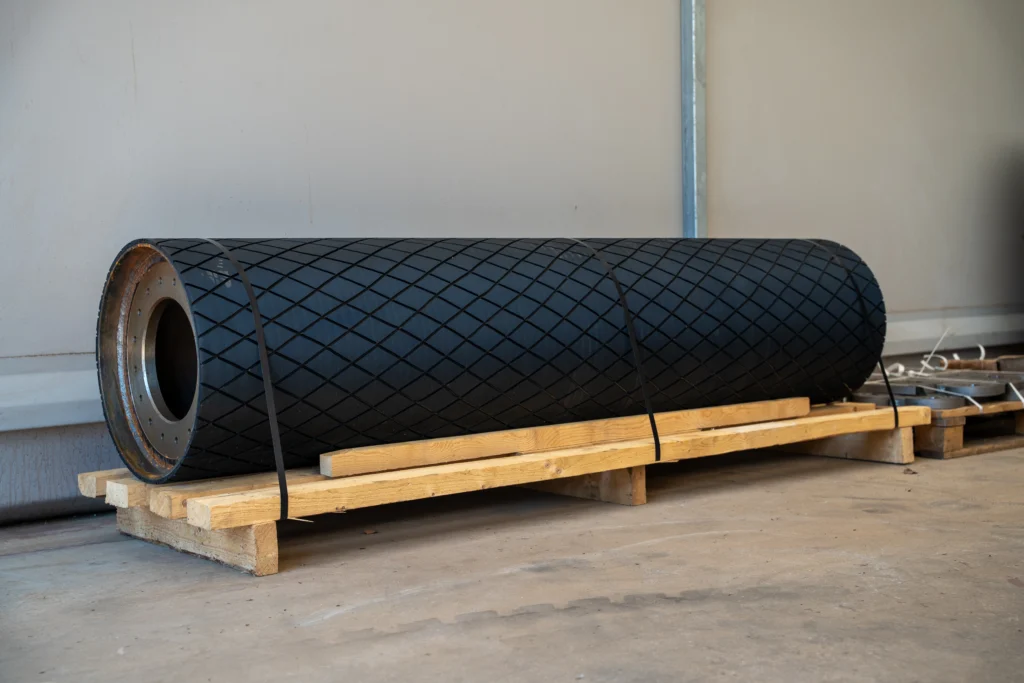
Vulcanization is a chemical process that strengthens and stabilizes rubber coatings applied to metal surfaces. It transforms raw or semi-processed rubber into a more durable, elastic material by creating cross-links between polymer chains. This process is essential for achieving long-lasting protection and performance in industrial applications.
The metal surface is cleaned and primed to ensure strong adhesion of the rubber layer.
Rubber sheets or liquid rubber are applied to the metal component.
The coated part is heated to a controlled temperature (typically 140°C–180°C) in the presence of sulfur or other curing agents. This initiates the cross-linking reaction.
After curing, the part is cooled and inspected for uniformity and adhesion quality.
Reach out to us to discuss your needs, request a quote, or learn more about how we can support your business with high-quality metalworking and engineering solutions.
(*) – required fields

OÜ Densel Baltic is a trusted Estonian engineering company specializing in precision mechanical parts and metal constructions.
Suur-paala 13, 13619
Tallinn, Estonia
IBAN: EE592200221014756763
Reg. Code: 10668331
VAT: EE100619553
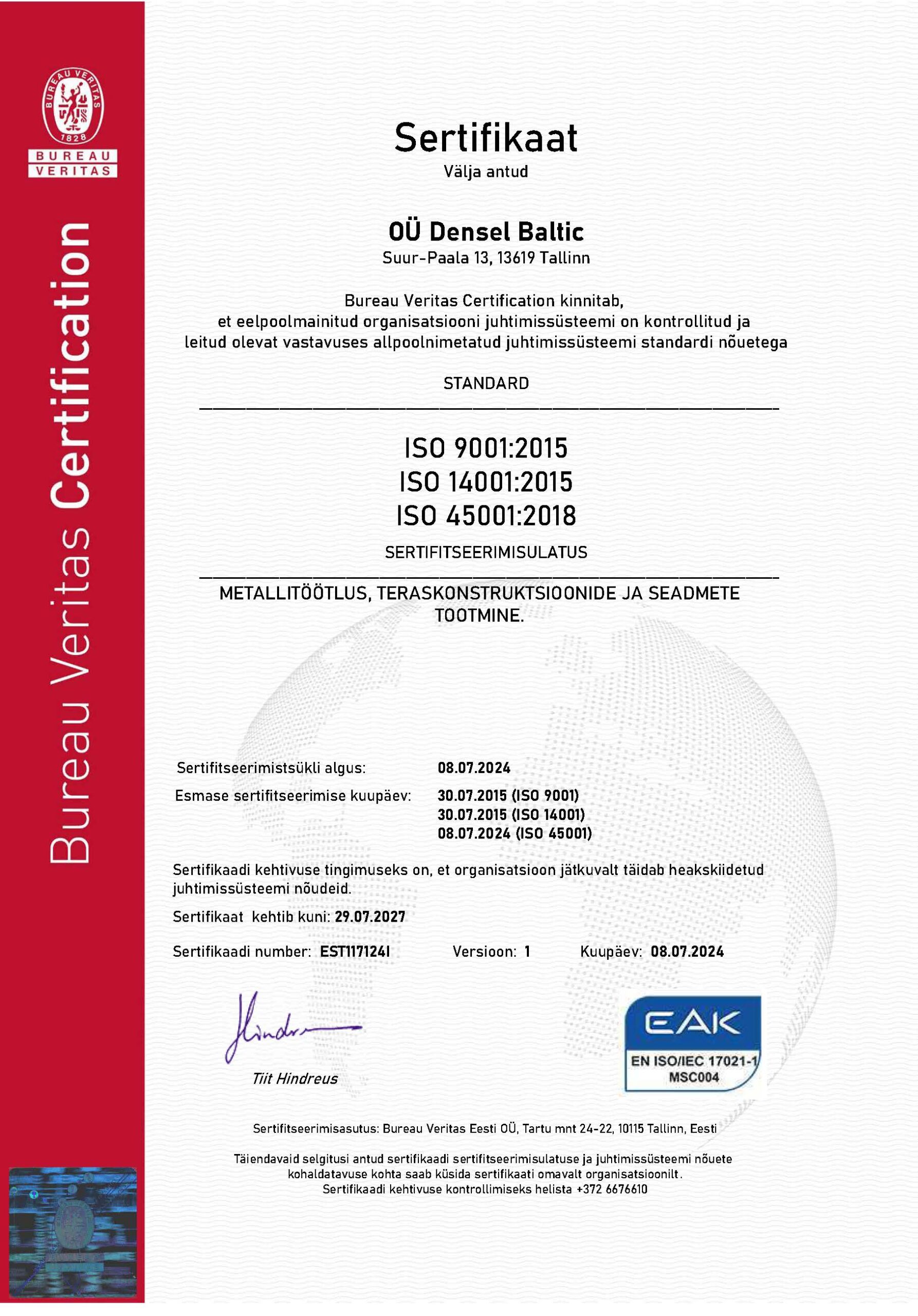
BUREAU VERITAS CERTIFICATION